



When the sun blazes high and the summer heat feels unrelenting, Spain offers a deliciously cool escape: chilled gazpacho. This vibrant, ruby-red soup is more then just a dish-it’s a cultural icon that captures the essence of spanish summers in every spoonful. Born from the sun-soaked fields of Andalusia, gazpacho blends ripe tomatoes, crisp cucumbers, fragrant garlic, and tangy vinegar into a refreshing symphony of flavors. Served icy cold,it’s the perfect antidote to scorching temperatures,inviting you to savor the season’s bounty in a way that’s both simple and extraordinary. Join us as we dive into the history, ingredients, and irresistible charm of Spain’s beloved summer soup delight.
Origins and Cultural Significance of Gazpacho in Spanish Cuisine
Chilled Gazpacho is more than just a refreshingly cool soup-it’s a vibrant emblem of Andalusian heritage and a celebrated culinary jewel across Spain. Historically rooted in southern Spain’s hot climate, gazpacho emerged as a practical and appetizing way for locals to stay hydrated and nourished during the sweltering summer months. This cold soup, traditionally consumed by farmers and villagers, combines the essence of locally grown vegetables blended simply but powerfully to create a dish that embodies both rustic simplicity and regional pride.
Its cultural significance extends beyond nourishment; gazpacho serves as a communal dish that brings families together to share a moment of relief and party of seasonal bounty. Every spoonful tells a story of sun-ripened tomatoes, crisp cucumbers, and fragrant garlic fields – a true depiction of Spain’s connection to the earth and the Mediterranean lifestyle.
Key Ingredients That Bring Gazpacho to Life
At the heart of this dish is a blend of fresh, garden-fresh ingredients that contribute bold colors, textures, and flavors. Each key component plays a pivotal role:
- Ripe tomatoes, bursting with natural sweetness and acidity, form the flavorful base.
- Crisp cucumbers add a cool, refreshing crunch.
- Green bell pepper brings a subtle sweetness and slight earthiness.
- Fresh garlic imparts a gentle pungency that balances the soup.
- Extra virgin olive oil enriches the texture and deepens the flavor profile with its fruity, peppery notes.
- Sherry vinegar introduces a bright acidity, perfectly cutting through the richness.
- Stale bread (soaked and blended) is traditionally used to create a luscious, velvety thickness.
- Salt and pepper season the soup to enhance its natural fresh flavors.
prep and Cook Time
Preparation: 20 minutes | Chill time: 2 hours | Total time: 2 hours 20 minutes
Yield
Serves 6 generous portions
Difficulty Level
Easy – Perfect for beginner cooks and seasoned chefs alike
Step-by-Step Guide to Crafting the Perfect Chilled Gazpacho
- Prepare the vegetables: Wash and roughly chop 6 large ripe tomatoes, 1 large cucumber (peeled if waxed), 1 green bell pepper (seeds removed), and 1 small red onion.
- Soak the bread: Tear 4 slices of stale white bread into pieces and soak them in ½ cup cold water for about 5 minutes until softened.
- Blend the base: In a high-powered blender or food processor, combine the tomatoes, cucumber, green bell pepper, red onion, 2 garlic cloves, and the soaked bread (including the water, drained but reserved).
- Pulse to combine: Blend until smooth but still slightly textured-about 1 minute. if the mixture is too thick, add the reserved soaking water gradually to reach your desired consistency.
- Season thoughtfully: Add ¼ cup extra virgin olive oil, 3 tablespoons sherry vinegar, 1 teaspoon salt, and freshly ground black pepper to taste. Blend again briefly until the oil is emulsified and the soup is silky.
- Chill extensively: Pour the soup into a large bowl, cover, and refrigerate for at least 2 hours to meld and chill thoroughly.this resting time is essential for flavors to harmonize.
- Final taste and texture check: Before serving, stir gazpacho well and adjust salt, pepper, or vinegar to taste.
Expert Tips for Serving and Pairing Gazpacho in Summer Gatherings
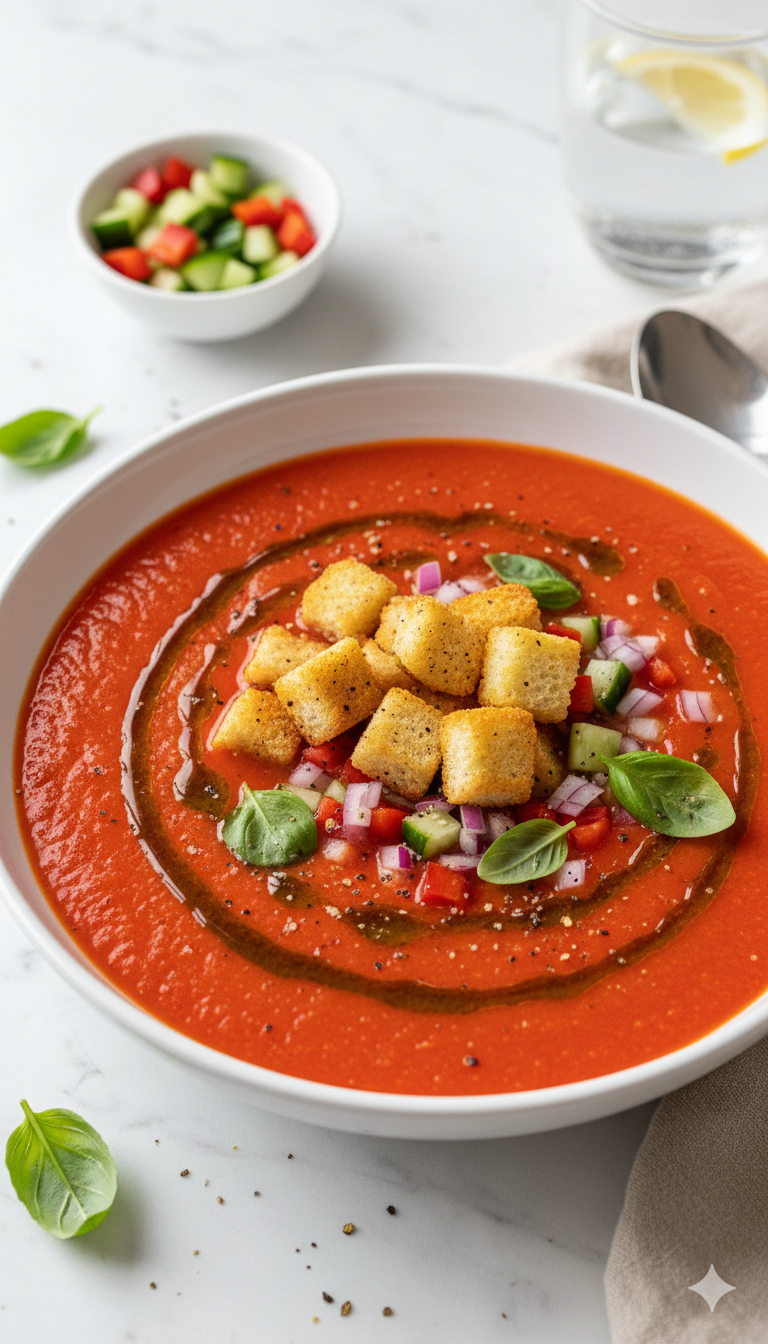
Present chilled gazpacho in chilled bowls or glasses for a refreshing experience. Garnish with finely diced cucumber, tomatoes, and a drizzle of olive oil or a sprinkle of fresh herbs like parsley or basil. For an added texture contrast, serve with crunchy toasted bread cubes or almond slivers on the side.
Gazpacho pairs beautifully with light Spanish tapas such as olives, Manchego cheese, or grilled vegetables. It also complements chilled seafood dishes, like shrimp or scallops, making it a superb addition to any summer feast.
To elevate the presentation, consider serving gazpacho shooters alongside cucumber and lemon wedges, or use brightly colored ceramic bowls that reflect the soup’s vibrant reds and greens. Whether for a casual picnic or an elegant outdoor soirée, this soup’s vibrant freshness never fails to impress.
Chef’s Notes and Tips for Success
- Ingredient freshness: Use the ripest, freshest tomatoes you can find-this truly transforms the flavor.
- Adjust acidity: If you can’t find sherry vinegar, a mild red wine vinegar works well, but taste and adjust carefully.
- Texture preferences: For a chunkier gazpacho, pulse the blender less or reserve some diced vegetables to stir in at the end.
- Make ahead: Gazpacho can be prepared up to 24 hours in advance-flavors only improve with resting time.
- Avoid watery soup: Remove seeds from cucumbers and bell peppers to prevent excess moisture.
- Vegan kind: This gazpacho is naturally vegan and gluten-free if using gluten-free bread or omitting the bread entirely.
| Nutrient | Per Serving (Approx.) |
|---|---|
| Calories | 110 kcal |
| Protein | 3 g |
| Carbohydrates | 15 g |
| Fat | 5 g |

for more Spanish-inspired summer favorites, explore our Tapas Classics article. To dive deeper into gazpacho’s nutritional benefits, visit the Encyclopaedia Britannica.
Q&A
Q&A: Chilled Gazpacho: Spain’s Refreshing Summer Soup delight
Q1: What is gazpacho, and why is it so popular in Spain?
A1: Gazpacho is a cold, vibrant soup made primarily from raw vegetables like tomatoes, cucumbers, peppers, and garlic, blended with olive oil and vinegar. It’s popular in Spain, especially during scorching summers, because it’s incredibly refreshing, hydrating, and packed with fresh, natural flavors that help beat the heat.
Q2: How did gazpacho originate?
A2: Gazpacho has roots that stretch back to Andalusia, the sun-drenched region of southern Spain. Originally a humble peasant dish, it was designed to make use of ripe summer vegetables and stale bread, turning simple pantry staples into a revitalizing and nourishing treat. Over centuries, it evolved into the iconic chilled soup celebrated worldwide today.
Q3: What makes gazpacho different from other soups?
A3: Unlike traditional soups served hot,gazpacho is always served chilled or cold. Its raw, uncooked ingredients are blended into a smooth or slightly chunky consistency, highlighting the natural freshness of each vegetable. This cold serving style turns gazpacho into a deliciously invigorating experience, ideal for hot days when a warm soup might feel too heavy.
Q4: What are the essential ingredients in a classic gazpacho?
A4: The essentials include ripe tomatoes, cucumbers, red bell peppers, onion, garlic, extra virgin olive oil, sherry vinegar (or another mild vinegar), salt, and sometimes day-old bread to give it body and texture. These ingredients combine to create a perfect balance of acidity,sweetness,and creaminess.
Q5: Are there regional variations of gazpacho across Spain?
A5: Absolutely! While the andalusian version is the most famous, various regions add their own twist. Some might include fruits like watermelon or strawberries for a sweet hint, while others experiment with herbs like basil or mint. each variation reflects the local produce and palate but always keeps the core idea of a chilled, vegetable-rich soup intact.
Q6: Can gazpacho be adapted for different dietary preferences?
A6: Definitely. Gazpacho is naturally vegan and gluten-free if you skip the bread or choose gluten-free bread. It’s also low-calorie and nutrient-dense, making it an excellent choice for health-conscious eaters. You can adjust the thickness and spice level easily, too, crafting a bowl that suits your taste and dietary needs.
Q7: How is gazpacho traditionally served and enjoyed?
A7: Gazpacho is traditionally served in bowls or wide glasses,sometimes garnished with finely diced vegetables,fresh herbs,or a drizzle of olive oil. It’s perfect as a starter, a light lunch, or even a healthy snack. The best way to enjoy it is indeed ice-cold, ideally straight from the fridge on a hot day.
Q8: What makes gazpacho a symbol of summer in Spain?
A8: Gazpacho captures the spirit of Spanish summer with its vibrant colors, fresh flavors, and cooling properties. It’s a dish that celebrates the abundance of the season’s harvest and promotes communal dining, often shared among friends and family outdoors. More than just food, it’s a refreshing ritual that embodies the warmth and vitality of Spanish life.
Q9: Can gazpacho be made ahead of time?
A9: Yes! Gazpacho actually benefits from resting a few hours or overnight in the fridge,as this allows the flavors to meld and deepen. It’s a fantastic make-ahead dish for busy summer days, ready to be served chilled and refreshing whenever you need a speedy boost.
Q10: Is gazpacho difficult to prepare at home?
A10: Not at all.Gazpacho is surprisingly straightforward to make-just wash, chop, blend, season, and chill. With a good blender and fresh ingredients, anyone can whip up this quintessential Spanish delight in less than 30 minutes. It’s an effortless way to bring a taste of Spain to your kitchen!
Final Thoughts
As the sun sets over the vibrant Spanish landscape, chilled gazpacho stands as a cool testament to the country’s culinary ingenuity-a simple blend of fresh ingredients that captures the essence of summer in every spoonful. Whether enjoyed on a bustling terrace in Andalusia or recreated in your own kitchen, this refreshing soup invites you to savor Spain’s timeless love for freshness, color, and flavor. So next time the heat rises, let gazpacho be your passport to a taste of Spanish sunshine, a chilled delight that cools the body and enlivens the spirit.