
There’s a certain magic in the airy, cloud-like texture of a perfectly made pavlova-a dessert that dances on the palate with its crisp shell and marshmallow-soft center. Loved by many for its delicate balance of sweetness and lightness, pavlova is more than just a treat; it’s an experience. whether you’re a seasoned baker seeking to refine your technique or a curious novice eager to whip up something extraordinary, this ultimate guide will walk you through the secrets of achieving pavlova perfection. From mastering that elusive fluffy texture to exploring inspired toppings, get ready to embark on a culinary journey that transforms simple ingredients into a sublime delight.
Pavlova Perfection begins with mastering the art of the meringue base-a delicate balance of airy softness and crisp edges that delights every bite. This iconic dessert, inspired by the captivating Russian ballerina Anna Pavlova, is a testament to simple ingredients transforming into sublime textures and flavors. Achieving the ultimate fluffiness while maintaining a perfectly crackled crust might seem daunting, but with precision and passion, you’ll create a showstopping centerpiece that embodies elegance and indulgence.
Prep and Cook time
- Preparation: 20 minutes
- Cooking: 1 hour 15 minutes
- Cooling: 1 hour
Yield
serves 8-10 elegantly.
Difficulty Level
Medium – Requires careful attention to technique for flawless results.
Ingredients
- 4 large egg whites, at room temperature
- 1 cup (200g) superfine caster sugar
- 1 tsp white vinegar (ensures stability and tang)
- 2 tsp cornstarch (cornflour), sifted
- 1 tsp pure vanilla extract
- 1 cup heavy whipping cream, chilled (for topping)
- 2 tbsp powdered sugar (to sweeten cream)
- Fresh fruits: passionfruit pulp, sliced kiwi, strawberries, blueberries, and mint leaves for garnish
Instructions
- Prepare your workspace: Make sure bowls and beaters are impeccably clean and dry-any oil or moisture can prevent egg whites from whipping properly.
- Whip the egg whites: Using a stand mixer or hand whisk, beat the room-temperature egg whites on medium speed until soft peaks form, approximately 3-4 minutes. This creates the foundation for your fluffy meringue.
- Gradually add sugar: Increase speed to high and add sugar tablespoon by tablespoon,allowing each addition to dissolve before continuing-this slow incorporation results in silky,glossy peaks. Test by rubbing a bit of meringue between your fingers; it should feel smooth, not grainy.
- Add cornstarch, vinegar, and vanilla: Gently fold these in with a spatula-cornstarch thickens and creates that iconic marshmallow-like interior, vinegar stabilizes the meringue, and vanilla adds delicate sweetness.
- Shape the base: Line a baking tray with parchment paper. Spoon your meringue onto the center and use the back of the spoon or an offset spatula to form a 9-inch circle with slightly higher edges, creating a shallow well to hold toppings later.
- Bake low and slow: Place in a preheated oven at 250°F (120°C). Bake for 1 hour 15 minutes-do not open the door during baking to avoid cracks and collapsing. The outer shell should be dry and crisp, while the center stays soft and pillowy.
- cool wholly: Turn off the oven,leave the door slightly ajar,and let the pavlova cool inside for at least 1 hour.This gentle cooling prevents sudden temperature changes that can crack your creation.
- Prepare whipped cream: Whip chilled heavy cream with powdered sugar until soft peaks form-light, luscious, and perfectly sweetened.
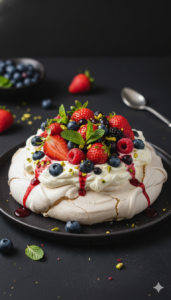
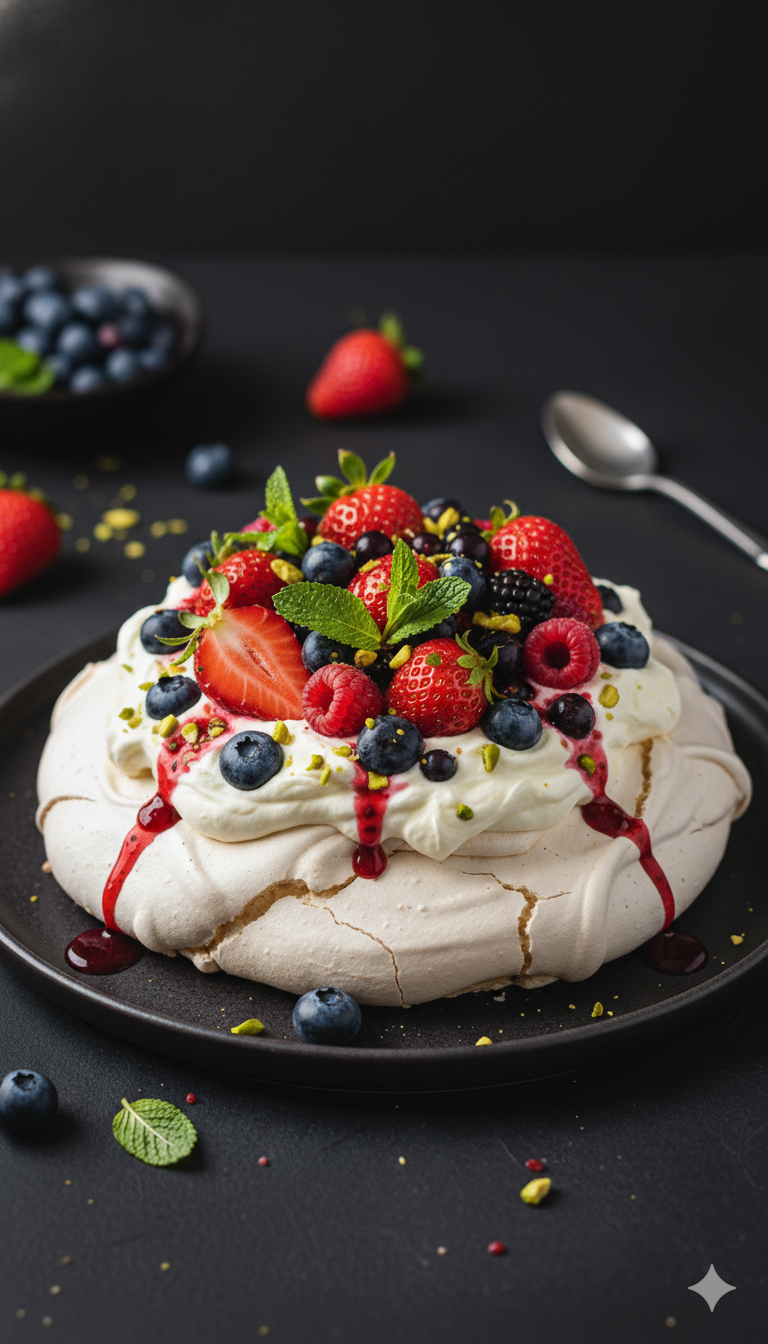
- Decorate boldly: Spoon whipped cream into the center of the cooled pavlova. Top generously with vibrant fresh fruits, like tangy passionfruit pulp, kiwi slices, juicy strawberries, and blueberries. Garnish with fresh mint leaves for an aromatic finish.
Chef’s Notes: Tips for Success
- Egg whites at room temperature whip more easily and yield greater volume-plan ahead by separating eggs early.
- Use superfine sugar to ensure faster dissolution,preventing gritty textures in your meringue.
- Slow sugar addition while whipping is key to stable peaks and a glossy finish-be patient!
- Avoid humidity: High moisture environments can cause pavlova to weep or become sticky-choose a dry day or bake when humidity is low.
- Make ahead: Pavlova base can be baked and stored in an airtight container for up to 2 days. add whipped cream and fresh fruit just before serving.
- For variations: Experiment with citrus zest or substitute vanilla extract with almond or rose water for unique flavor profiles.
Serving Suggestions
Present your pavlova on a large white platter to showcase its pristine white structure contrasted against colorful fruit. Adding a drizzle of passionfruit syrup or a dusting of edible flowers enhances both aroma and presentation. Serve each slice with a forkful of whipped cream and a mix of fresh fruit, capturing the harmony of textures-the crisp shell, the marshmallow center, and the refreshing toppings.

| Nutrient | Per serving |
|---|---|
| Calories | 280 kcal |
| Protein | 4 g |
| Carbohydrates | 40 g |
| Fat | 11 g |
For additional inspiration on meringue desserts and decorating techniques, explore our collection of meringue-based recipes. For scientific insight into egg whites and meringue chemistry, consult Serious Eats’ comprehensive guide.
Q&A
Q&A: Pavlova Perfection – Your Ultimate Guide to a Fluffy Delight
Q1: What exactly is a pavlova?
A1: Imagine a cloud spun into a dessert-light, crisp on the outside with a marshmallowy center, crowned with whipped cream and fresh fruit. Pavlova is a meringue-based dessert named after the russian ballerina Anna Pavlova,embodying grace and sweetness in every bite.
Q2: What makes a pavlova different from other meringue desserts?
A2: While many meringues are crunchy throughout, pavlova boasts a delicate contrast: a shell that cracks softly under your fork, giving way to a pillowy, gooey inside. This lovely texture harmony sets it apart and delivers that signature fluffy delight.
Q3: How do I achieve the perfect pavlova texture?
A3: The secret lies in patience and precision. Whip your egg whites to stiff peaks with a pinch of cream of tartar or vinegar to stabilize them. Slowly incorporate sugar, allowing it to dissolve fully for a glossy, strong meringue. Baking at a low temperature for a longer time ensures a crisp exterior with a chewy heart, then let it cool gradually to avoid cracks.
Q4: Can I customize the toppings?
A4: Absolutely! While classic pavlova is adorned with whipped cream and tropical fruits like kiwi and passionfruit, creativity knows no bounds. From vibrant berries and edible flowers to exotic citrus segments or even a drizzle of chocolate sauce-your pavlova canvas is yours to decorate.
Q5: Is pavlova gluten-free?
A5: Yes! Pavlova’s main ingredients are egg whites and sugar, which contain no gluten. This makes it a delightful dessert option for those with gluten sensitivities or celiac disease, combining luscious flavor with dietary friendliness.
Q6: Any tips for preventing cracks on the pavlova surface?
A6: Cracks can be the fairy dust of pavlova, adding rustic charm, but to minimize them, avoid sudden temperature changes. Bake slowly, then turn off the oven and let the pavlova cool inside with the door slightly ajar. This gentle transition helps maintain its flawless dome.
Q7: How far in advance can I make pavlova?
A7: You can prepare the meringue base up to 2 days ahead and store it in an airtight container to preserve its crispness. However, add whipped cream and fresh fruit just before serving to keep them fresh and vibrant-after all, pavlova deserves to shine at its fluffiest!
Q8: Can I make pavlova vegan?
A8: Customary pavlova leans on egg whites, but innovative cooks have mastered aquafaba meringue-the magical liquid from chickpeas-as a plant-based choice. With some practice, your vegan pavlova can be just as fluffy and spectacular.
Q9: what’s the origin story of pavlova?
A9: This dessert’s origins spark a amiable rivalry between Australia and New Zealand, both claiming the honor of inventing pavlova in the 1920s or ’30s as a tribute to Anna Pavlova’s visit down under. Regardless of who owns the title, both countries celebrate this airy masterpiece with pride.
Q10: Why is pavlova considered a crowd-pleaser?
A10: Pavlova’s lightness makes it the perfect finale after a hearty meal, while its elegant appearance adds sophistication to any table. The vibrant toppings invite a burst of freshness, and the delicate texture tantalizes the palate, making it a beloved dessert for gatherings and celebrations alike.
Ready to bake your own fluffy cloud? With our ultimate guide, pavlova perfection is just a whisk away!
Future Outlook
As the delicate meringue melts into a cloud of sweetness and the vibrant burst of fresh fruit dances on your tongue, you’ll realize that mastering pavlova isn’t just about baking-it’s about crafting a moment of pure delight. With this ultimate guide in hand, your journey to pavlova perfection is well underway. So whether you’re a seasoned baker or a curious newcomer,embrace the fluff,savor the crisp,and let each slice be a celebration of lightness and luscious flavors. After all, in the world of desserts, few things rival the airy magic of a perfectly baked pavlova. Happy baking!